
Aussies urged to know the risk with 60% saying they consume raw fish or seafood and 17% do this on a weekly basis (1 November 2026)
Summary
Food Safety Information Council has released new research showing 60% of Aussies consume raw fish or seafood, and 17% do at least once on a weekly basis.
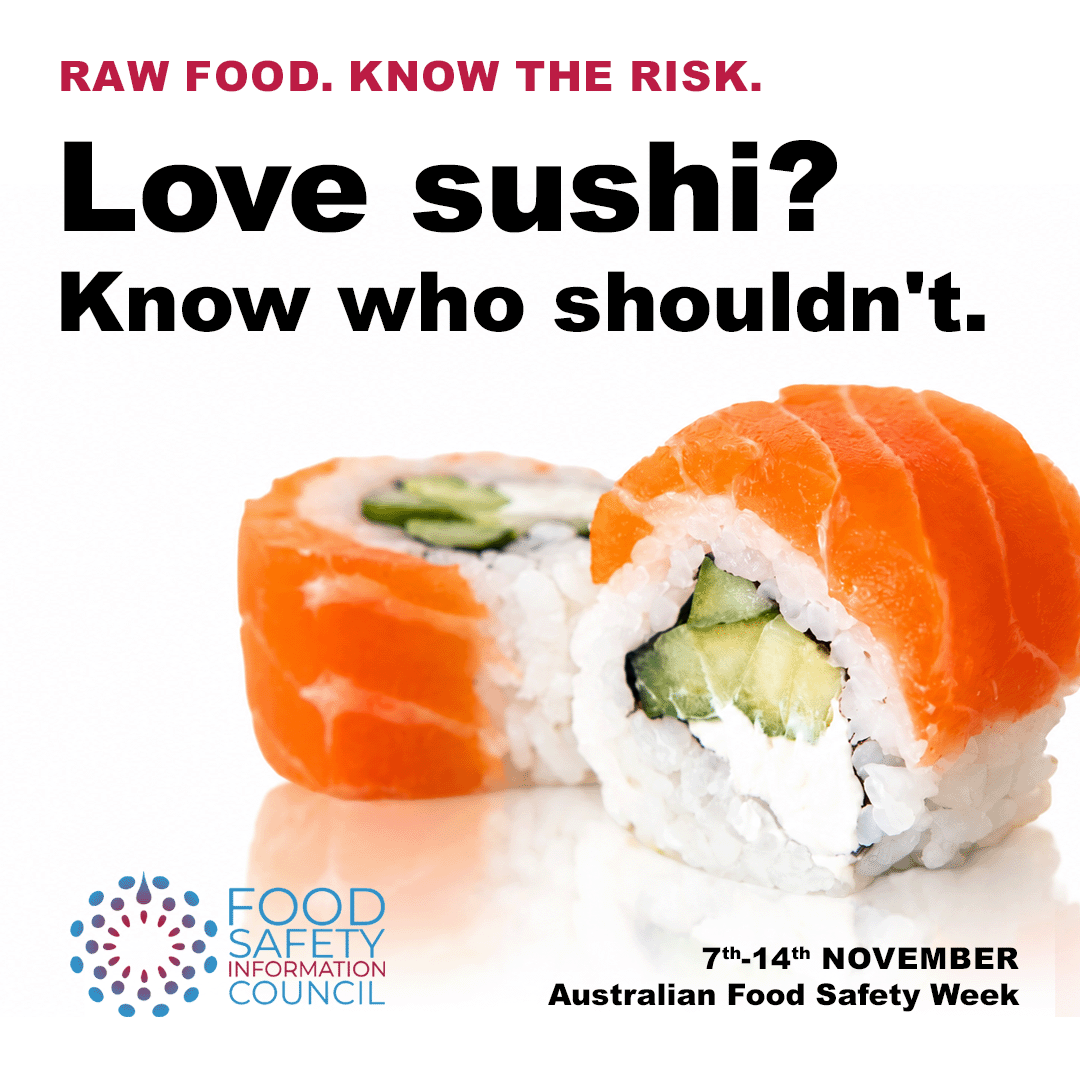
Ahead of Australian Food Safety Week 7 to 14 November 2026, with the theme ‘Raw food know the risk’, the Food Safety Information Council has released new research showing 60% of Aussies consume raw fish or seafood, and 17% do at least once on a weekly basis.
Associate Professor Julian Cox, Council Scientific Director, said that fish and seafood are an important part of a nutritious diet and we should be consuming two to three serves each week. But seafood can pose food safety risks. Time temperature abuse can raise the risk of several food poisoning hazards, including bacteria like Vibrio parahaemolyticus and Vibrio vulnificus, and scombroid poisoning from fish such as tuna and mackerel (among others). Other hazards include a range of shellfish toxins, and ciguatera poisoning, associated with predatory fish such as Spanish mackerel, barracuda, and grouper. Consumers should also avoid excessive intake of shark (flake) due to concerns about mercury.
But we now know also that seafood can be a risk when it comes to parasites, especially when consumed raw. Like any raw food, raw fish dishes such as sushi, sashimi and ceviche can pose food safety risks including by parasites.
‘Our research showed that 68% of those surveyed usually bought their raw fish dishes from a sushi bar, 40% from a café or restaurant and 32% pre-made from a supermarket or fishmonger. There are food safety rules governing the sale of raw fish dishes that you buy from a food outlet.
‘Of concern, 18% said they prepared their own raw fish dish from fish they had bought, 5% said they made dishes from fish they had caught and 4% bought pre-made raw fish dishes through vendors on social media such as Facebook Marketplace who could be unregulated. Remember that raw fish can be a higher risk particularly for certain populations and also be a source of infection from parasites. Traditional additions to raw fish dishes such as vinegar, lemon juice or salt will not reliably kill the infectious stages of parasites, destroy toxins or kill pathogens.
‘Pregnant women, the elderly and people with weaker immune systems should not eat raw fish dishes or cold cooked prawns and cold smoked fish because of the potential risk of the food poisoning bacterium Listeria monocytogenes which can be fatal. This applies whether the raw fish dishes are bought commercially or prepared at home. A safer alternative for these groups is to cook any fish or seafood to at least 63°C in the centre, measured using a thermometer.
‘Just because a fish looks healthy does not necessarily mean it is free of parasites or safe to eat raw. There is evidence that seafood parasitic illness is increasing around the world, although cases may be underdiagnosed or under reported in Australia. This increased consumption of raw and undercooked wild caught fish, both marine and freshwater, may increase exposure to these parasites. Recreational fishers should not eat their catch raw but gut their catch immediately and cook it thoroughly.
‘Symptoms of parasitic infection are wide ranging and can include stomach ache, vomiting and diarrhoea, as well as allergic type reactions such as tingling tongue, cough, a strange rash, heart palpitations or even anaphylactic shock. Symptoms can occur within six hours or up to a week after consumption. Allergic symptoms can occasionally be immediate. Some of these symptoms may be prolonged or become chronic until the parasite is physically evicted from the body or appropriate treatment is prescribed by your doctor.
‘If you want to prepare raw fish dishes yourself follow these 7 simple tips:
- Know your source: source good quality fish from a reputable supplier that uses the Australian Fish Names Standard so you know what type of fish you are buying. Ask whether the fish is suitable for raw consumption and has been appropriately handled and frozen to control parasites, among other hazards.
- Avoid that recreational catch: it is best not to use recreational fish caught personally or by friends in raw fish dishes. Cook your catch well.
- Freeze it: freezing the fish for a minimum of seven days at minus 20°C (longer for large fish) will kill parasites. It’s important to know from your retailer if the fish you are purchasing has been frozen and for how long. Remember that freezing may not kill food poisoning bacteria or viruses or prevent allergic reactions from parasites.
- Wash your hands: before and after preparing the raw fish wash your hands with soap and water for 20 seconds and dry thoroughly.
- Wash your tools: make sure all utensils and chopping boards are thoroughly washed in warm soapy water and dried. Take particular care to scrupulously clean bamboo rolling mats for sushi; they should be scrubbed using a brush with soap under hot water to remove any food residue and left to dry thoroughly.
- Cool rice quickly: remember that sushi rice can also be a food poisoning risk as toxins can form if it cools slowly. Follow sushi recipes carefully, especially the amount of vinegar to be added, and once cooked divide the rice into small containers, cover and cool in the fridge. This is one of the most important food safety issues for sushi.
‘Finally, we should all eat more fish, and both raw and cooked seafoods are a great way of including more Omega 3 and 6 in our diet.’ Associate Professor Cox concluded.
Thanks to Professor Shokoofeh Shamsi, Charles Sturt University for her expertise in fish parasites.
Thanks to our member SafeFish is supported by funding from the Fisheries Research & Development Corporation on behalf of the Australian Government and from the Australian seafood industries.
Media contact:
Lydia Buchtmann, Food Safety Information Council, 0407 626 688 or info@foodsafety.asn.au
Research details
Conducted by Omnipoll online over the period August 26-31, 2026 among 1239 people aged 18+. Respondents were drawn from the online consumer panel managed by Lightspeed Research, OmniPoll’s online partner and sample quotas were set for each state, city and regional area, by sex and age. To help reflect the overall population distribution, results were post-weighted to Australian Bureau of Statistics (2021 Census) data on education, age, sex and area.


