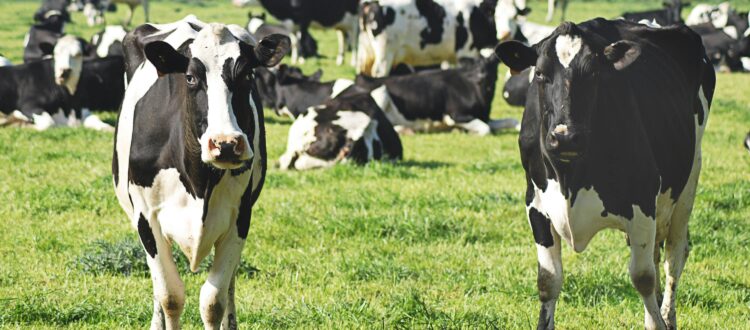
The theme of Australian Food Safety Week 7 to 14 November 2026 is ‘Raw food, know the risk’ and the Food Safety Information Council commissioned consumer research into the consumption of high-risk raw foods such as raw cows’ milk which is illegal to sell as a human food.
The national Omnipol survey found one in six (16%) Australian adults chose to consume raw cows’ milk. That is milk that hasn’t undergone a pasteurisation process which heats the milk to 72°C for at least 50 seconds to kill any harmful bacteria that might be present (or a similar safety process such as ultra-heat treatment or high-pressure treatment).
Council CE0 Lydia Buchtmann said that cows’ milk pasteurisation, or similar processes, are a major public health achievement killing harmful bacteria such as Salmonella, Listeria, Yersinia, Campylobacter, Staphylococcus and E. coli and can prevent potentially fatal diseases such as tuberculosis. The nutrient value of milk is generally unaffected by pasteurisation.
‘Milk has been pasteurised in Australia since the early 1900s and has been standard practice since the mid-1950s. Unpasteurised goats’ milk and cheese is permitted to be sold with strict food safety requirements as are some raw milk cheeses with strict safety controls.
‘The research found consumption of raw milk is more likely amongst men (20%), adults aged 25 to 34 (29%) and adults aged 36 to 49 (23%). It is also higher in households with children (25%), those living in capital cities (18%) and higher income households (20% earning over $90,000pa). 73% of raw milk consumers said they sourced it directly from a farm, 15% have their own cow or are part of a ‘cow share’ program and 27% buy it online.
‘Some raw cows’ milk continues to be sold ‘not for human consumption’ as ‘bath milk’, ‘cosmetic milk’ or ‘pet milk’ and Victoria even requires a bittering agent added to bath milk to discourage drinking. These bath, cosmetic and pet milks are not sold as a food and are not required to comply with food safety requirements and therefore pose a significant risk if consumed.
‘Of specific concern is that the survey found that raw milk consumption was higher in households with children, possibly putting those children at risk of illness if they also consumed the raw milk or were exposed due to cross contamination.
‘We urge people not to consume raw milk so we can reduce the estimated 4.67 million cases of food poisoning in Australia each year that result in 47,000 hospitalisations and a cost to the economy of $3 billion,’ Ms Buchtmann concluded.
Media contact:
Lydia Buchtmann, Food Safety Information Council, 0407 626 688 or info@foodsafety.asn.au
Methodology the survey was conducted nationally amongst 1229 people aged 18+.
Respondents were drawn from the online consumer panel managed by Lightspeed Research, OmniPoll’s online partner. Sample quotas were set for each state, city and regional area, by sex and age.
Interviews were conducted online over the period October 22-28, 2026.
Weighting To help reflect the overall population distribution, results were post-weighted to Australian Bureau of Statistics (2021 Census) data on education, age, sex and area.